Pet First-Aid Cheat Sheet: Must-Haves for Dogs & Cats
What should be included in a pet first-aid cheat sheet for dogs and cats?
A good pet first-aid cheat sheet should help you act fast, stay calm, and avoid common mistakes while you’re trying to reach a veterinarian. Keep it short enough to scan in seconds, and store a copy with your pet’s supplies, in the car, and on your phone.
Essential emergency info
Include your regular vet’s name and number, the nearest 24/7 emergency clinic, and animal poison control contact info. Add your pet’s basics (name, weight, age, microchip number) plus any allergies, medications, and chronic conditions, since these can change what’s safe to do at home.
Quick “what to do” steps for common emergencies
List simple actions for the problems most likely to happen: bleeding wounds (apply firm pressure and bandage), choking (look for obvious obstruction; don’t blindly sweep), seizures (clear the area; don’t restrain; time it), heatstroke (move to shade; cool with lukewarm water; go to the vet), vomiting/diarrhea (watch for blood, dehydration, repeated episodes), and suspected poisoning (secure the product/label; call first before giving anything).
Vital signs and red flags
Include normal ranges for temperature, breathing rate, and heart rate for dogs and cats, plus “go now” warning signs: pale/blue gums, trouble breathing, collapse, uncontrolled bleeding, severe pain, or a bloated/tight abdomen.
Handling and transport safety
Add a reminder to use a muzzle or towel wrap when appropriate (even gentle pets can bite in pain), how to move an injured pet using a blanket as a stretcher, and how to keep the head and neck stable if trauma is suspected.
Checklist of supplies to keep with the sheet
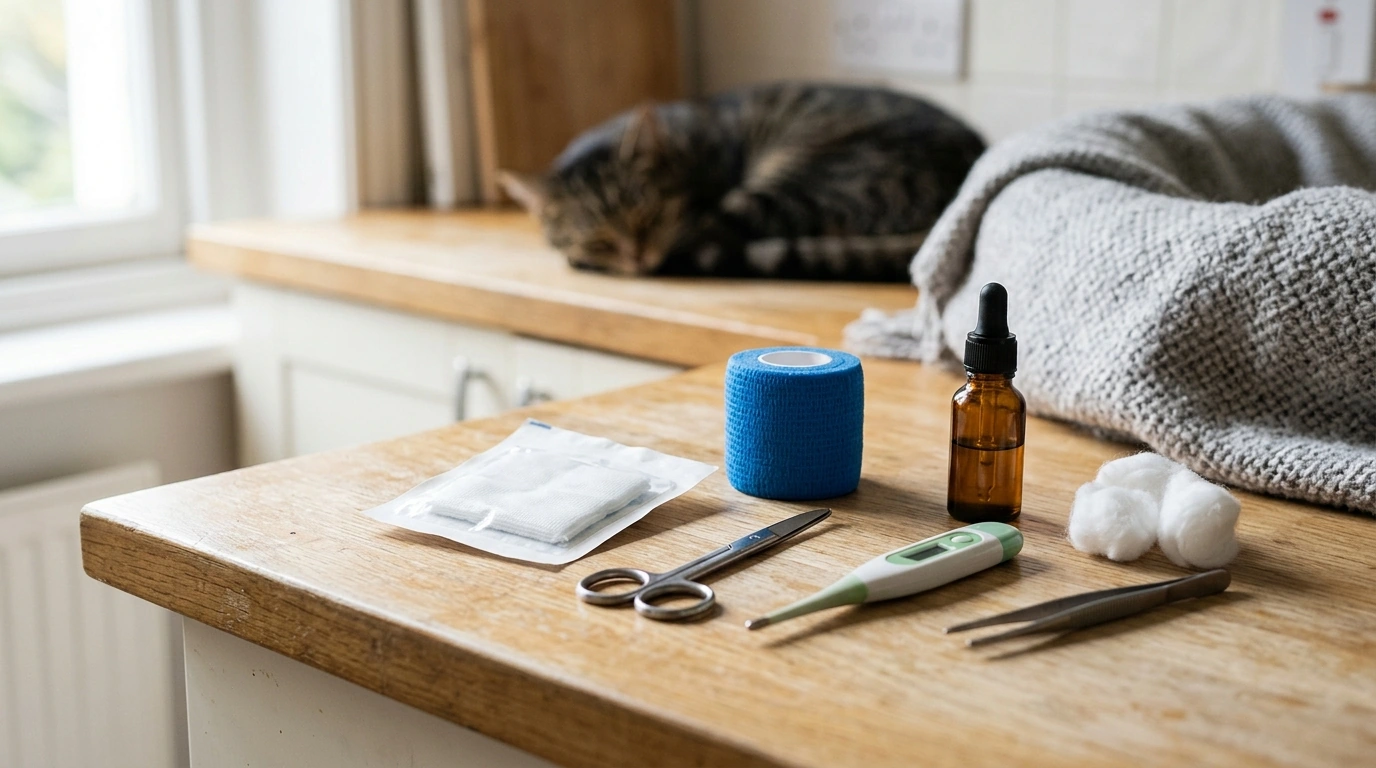
Pair the cheat sheet with a small kit: gauze, non-stick pads, vet wrap, adhesive tape, saline, antiseptic wipes, tweezers, blunt-tip scissors, a digital thermometer, styptic powder, disposable gloves, a towel, and a leash/carrier. For a printable version and an emergency vet guide, see this pet first-aid cheat sheet resource.
FAQ
What items should I keep in a pet first-aid kit at home?
Keep gauze and non-stick pads, vet wrap, adhesive tape, saline, antiseptic wipes, tweezers, blunt scissors, gloves, a digital thermometer, styptic powder, and a towel. Store it in a labeled container and replace expired items.











Leave a comment