Smart vs Regular Litter Boxes: How Self-Cleaning Works
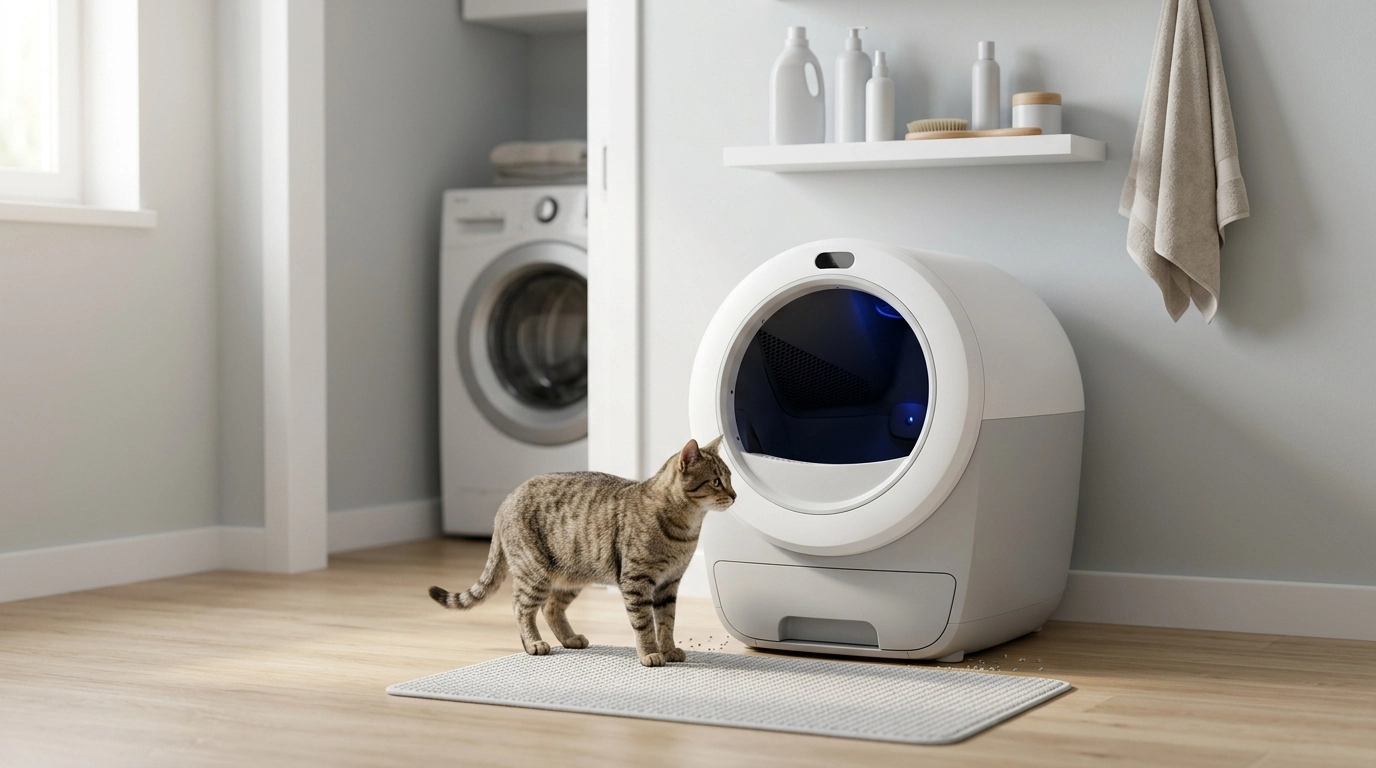
How does a smart self-cleaning cat litter box work compared to a regular litter box?
A regular litter box relies on you to do everything: scoop clumps, remove waste, top off litter, and scrub the box often enough to keep odors down. A smart self-cleaning litter box automates much of that routine using sensors, a cleaning mechanism, and a sealed waste bin—so the box is refreshed after most visits with far less hands-on maintenance.
What happens after your cat uses a smart self-cleaning box
Most smart models use weight sensors or motion detectors to confirm a cat has entered and exited. After a short delay (to let clumps form), the unit runs a cleaning cycle. Depending on the design, it may rake, rotate, or sift the litter so clean granules return to the main bed while clumps and solid waste are separated into a covered compartment. Many units also track usage and send app alerts when the waste drawer is full or the unit needs attention.
How a regular litter box handles the same job
With a standard pan, the litter stays mixed with waste until it’s scooped out. Clumps can break apart when neglected, spreading odor and ammonia and leaving more residue stuck to the box. The difference isn’t just convenience—consistent, timely waste removal is typically better for smell control and can make daily upkeep feel more manageable.
Key differences that matter day to day
Smart self-cleaning boxes usually do better at keeping the litter surface clean and reducing “open-air” odor by moving waste into a closed bin quickly. Regular boxes can be perfectly fine, but they depend on frequent scooping and washing. Trade-offs with smart boxes include higher upfront cost, the need for power, occasional part cleaning, and making sure your cat is comfortable with the movement and sound.
For a deeper breakdown of features like UV options, safety sensors, and maintenance tips, visit this UV self-cleaning cat litter box guide.
FAQ
Do smart litter boxes smell less?
Often, yes—because waste is separated into a covered bin soon after use. Odor control still depends on litter type, how well the waste drawer seals, and how frequently the bin is emptied.








Leave a comment