40×28 Arched Wall Mirror: Brighten Living Rooms & Bedrooms
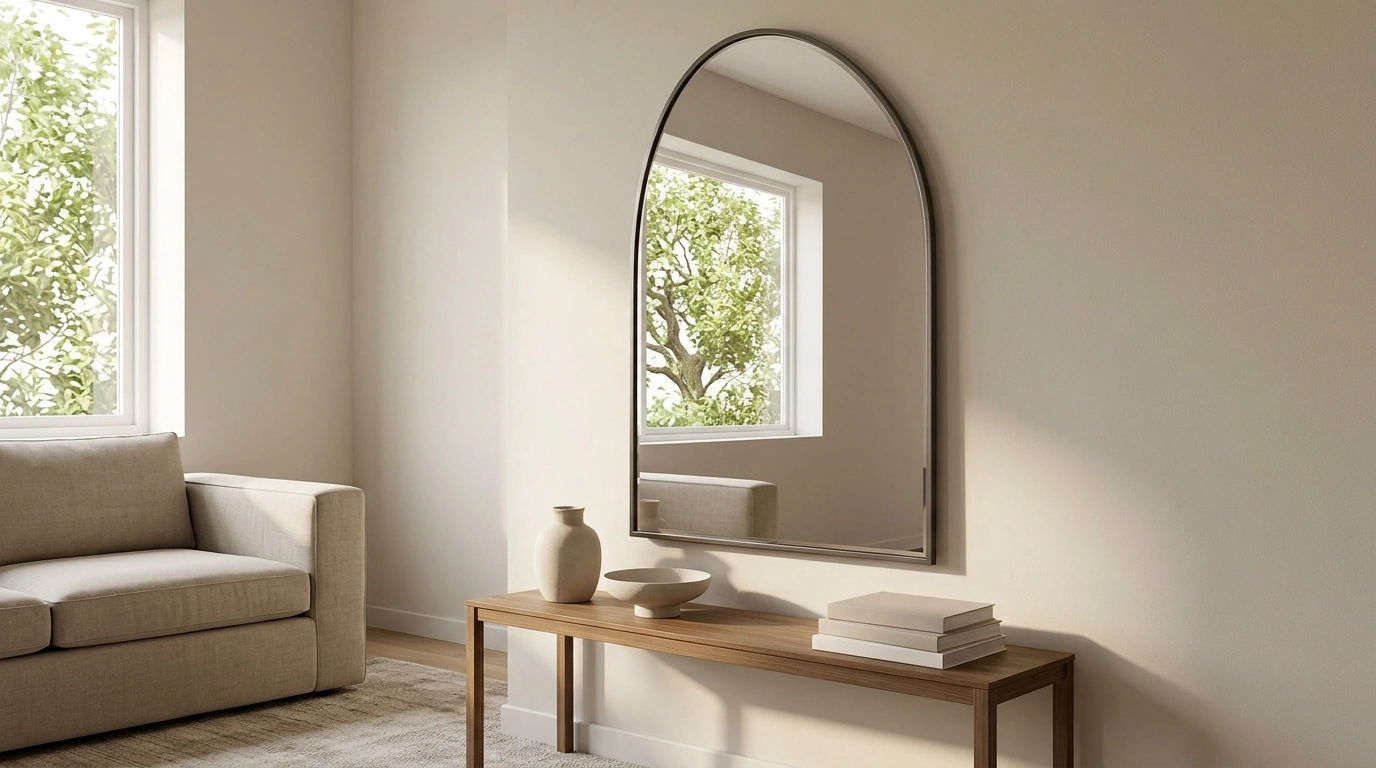
Large Arched Decorative Wall Mirror 40″x28″ for Living Room and Bedroom
An arched wall mirror can soften hard angles, brighten a room by bouncing light, and create a taller, more open feel—especially in living rooms and bedrooms where wall space works double duty for function and style. The Large Arched Decorative Wall Mirror 40″x28″ for Living Room and Bedroom is sized to anchor a focal wall while staying versatile enough for different layouts, from above a console to beside a dresser.
What Makes an Arched Mirror Work So Well
The arch is more than a pretty curve—it’s a shape that naturally relaxes a space. While rectangular décor can look crisp and tailored, too many straight edges can make a room feel rigid. An arched mirror adds a gentle counterpoint that’s easy to style year-round.
- The curved top adds architectural interest and balances boxy furniture silhouettes.
- A vertical emphasis helps ceilings feel higher and corners feel less heavy.
- Mirrors visually “extend” a room by reflecting adjacent space, artwork, or windows.
- The arched profile fits multiple aesthetics, from modern and transitional to classic.
If the goal is a brighter room, placement matters as much as the mirror itself. Daylighting guidance from the National Association of Home Builders (NAHB) underscores how light movement affects comfort—mirrors help distribute that light deeper into the space when they’re positioned thoughtfully.
Key Details at a Glance
- Overall size: 40″ x 28″, designed to read as a statement piece without requiring a full wall.
- Best use: decorative wall mounting for living rooms and bedrooms where light and depth are priorities.
- Ideal pairings: above a console table, over a dresser, near an entry-style drop zone, or as a vertical accent beside a seating area.
- Availability: in stock.
Quick Placement Guide for a 40″x28″ Arched Wall Mirror
| Location | Recommended placement | Spacing tips | Visual effect |
|---|---|---|---|
| Above a console table | Center mirror over the console | Leave 4–8 inches between tabletop and mirror | Creates a focal point and reflects light into the room |
| Above a dresser | Align with dresser centerline | Mirror width ideally 60–80% of dresser width | Adds height and makes the bedroom feel larger |
| Beside a window | Hang on the adjacent wall or between windows (if space allows) | Keep a few inches from trim for a clean margin | Boosts daylight and softens harsh shadows |
| Behind a reading chair | Mount slightly above seated eye level | Leave breathing room from adjacent art pieces | Adds depth without cluttering surfaces |
Living Room Styling Ideas
In a living room, mirrors do two jobs: they support the layout visually and they help lighting feel intentional. A 40″x28″ arched mirror is especially handy when you want a focal point but don’t want to commit to a full wall installation.
- Console vignette: Pair the mirror with a low bowl or tray, a tall vase, and a small stack of books to echo the mirror’s vertical line.
- Fireplace wall: If a mantel is present, an arched mirror can soften the geometry of a rectangular surround and create a classic focal moment.
- Layering with art: Place the mirror near framed prints rather than mixing too many frames directly on the same line—let the arch stand out.
- Lighting boost: Position across from a lamp or near a window to amplify brightness and reduce the need for extra fixtures.
For evening ambiance, a sculptural light source can make the reflection feel curated rather than accidental. Consider placing the Nordic Lava Led Floor Lamp within view of the mirror so the glow becomes part of the room’s nighttime “scene.” For broader styling references and room-balancing principles, the American Society of Interior Designers (ASID) offers design resources that reinforce the value of proportion, negative space, and cohesion.
Bedroom Placement That Feels Intentional
Bedrooms benefit from mirrors that feel calm and purposeful—helpful, but not visually busy. An arched profile tends to read softer than sharp-cornered shapes, which can be a plus in a space meant for rest.
If you’re building a small reading nook in the bedroom, a cozy chair can help “ground” the vertical mirror shape. A compact seat like the Kids Recliner Chair can work well in a corner where you want comfort without a bulky footprint.
Sizing and Hanging Tips for a Polished Look
Care and Maintenance
Pairing Ideas from the Same Collection of Finds
- Add a warm glow nearby with the Nordic Lava Led Floor Lamp to make the mirror’s reflection feel intentional at night.
- Balance the vertical mirror shape with a lower, comfortable accent seat like the Kids Recliner Chair in a reading corner.
- If updating adjacent spaces, keep finishes coordinated so the mirror doesn’t feel visually isolated—repeat one tone (warm metal, black accents, or soft neutrals) at least two to three times.
FAQ
Is a 40″x28″ arched wall mirror large enough to be a focal point?
Yes—40″x28″ reads as a statement above consoles and dressers, especially when it’s centered and given a little negative space around the frame. Strong focal impact also depends on scale relative to the furniture (often 60–80% of the furniture width) and whether nearby lighting helps the mirror catch and spread brightness.
Where should an arched mirror be hung in a living room for the best light?
Hang it near a window or across from a lamp so it can reflect a bright, uncluttered view and distribute light farther into the room. Avoid placing it where direct sun causes harsh glare at seated eye level; a slight shift left or right usually fixes that.
How high should a wall mirror be hung above a dresser or console?
A practical guideline is to leave about 4–8 inches between the furniture surface and the bottom of the mirror. Center the mirror to the furniture’s centerline for balance, then adjust slightly so the mirror’s midpoint feels comfortable for typical eye level in the room.










Leave a comment