500W 8-Cup Food Processor: Glass vs Steel, 2 Speeds
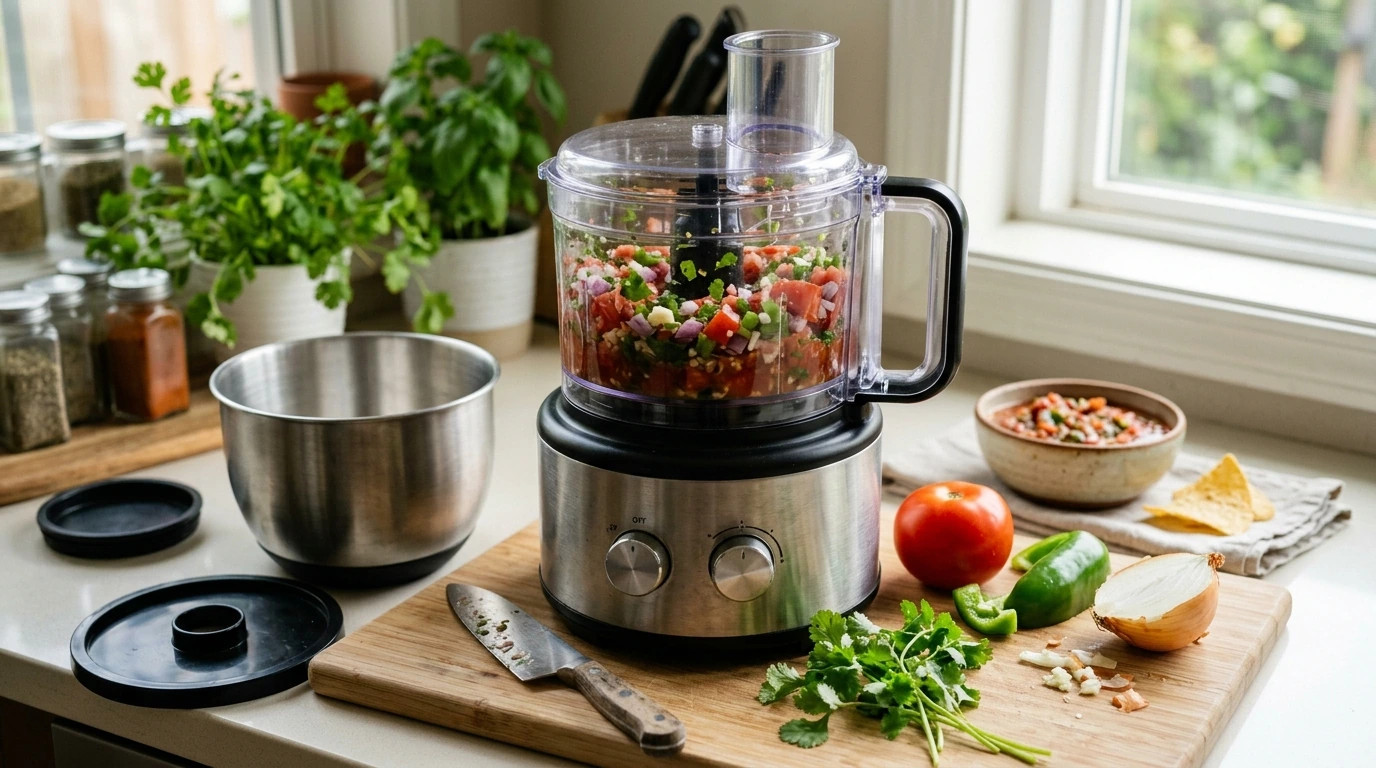
500W Electric Food Processor with 8-Cup Glass & Stainless Steel Bowls (2 Speeds): Practical Guide and Everyday Uses
A compact food processor can take over repetitive prep—chopping onions, mincing herbs, making salsas, or blending dips—without taking over the countertop. This 500W model pairs two bowl options (8-cup glass and stainless steel) with a simple 2-speed control, aiming for quick results, easy cleanup, and flexible use across savory and sweet tasks.
What This Food Processor Is Built to Do
This style of processor is designed for the kitchen tasks that come up day after day: quick chopping, consistent mincing, and fast mixing that’s hard to replicate with a knife when you’re short on time.
- 500W motor for routine prep tasks like chopping, mixing, and mincing.
- 8-cup capacity that supports family meals, batch prep, and casual entertaining.
- Two bowl choices so you can match the bowl to the ingredient and your cleanup preferences.
- Two speeds for practical control: gentler processing vs. faster chopping.
- Best for repeatable prep (salsas, chopped aromatics, dips) rather than heavy dough work.
Glass Bowl vs Stainless Steel Bowl: When Each One Makes Sense
Having both glass and stainless steel bowls can feel like a small detail, but it can make prep smoother. The “right” bowl often comes down to visibility, how quickly you want to clean up, and whether you’re working with strong aromas or staining ingredients.
- Glass bowl: easy to see texture changes (salsa chunkiness, onion size, herb mince) while processing.
- Stainless steel bowl: durable and lighter to handle; useful for frequent everyday prep.
- Cold items: stainless can help maintain cooler temps during short blending bursts (helpful for dips and sauces).
- Odor and staining: stainless tends to resist lingering smells and color stains; glass is non-porous and also resists odors but can show smudges.
- Serving and storage: glass can be convenient for serving at the table; stainless is ideal for quick transfer and rinse.
Choosing the Right Bowl for Common Kitchen Tasks
| Task | Better Bowl Choice | Why It Helps |
|---|---|---|
| Salsa, pico de gallo, relish | Glass | Texture is easy to monitor at a glance to avoid over-processing |
| Onion/garlic prep for cooking | Stainless steel | Fast rinse-and-go workflow for everyday use |
| Herbs (parsley, cilantro, basil) | Glass | Visibility helps stop at a coarse chop instead of a paste |
| Nut chopping (small batches) | Stainless steel | Durable bowl choice for frequent chopping and quick cleanup |
| Dips and spreads (hummus-style, bean dips) | Either | Use stainless for fast cleanup; use glass when watching smoothness is the priority |
| Breadcrumbs or cracker crumbs | Stainless steel | Easy to pour out and wipe clean after dry processing |
Understanding the 2-Speed Control (and How to Use It Well)
Two speeds are intentionally simple: you’re not scrolling through settings—you’re choosing “gentle” versus “fast,” plus using pulsing to fine-tune the final texture.
- Lower speed: best for coarse chops and pulsing, reducing the chance of turning ingredients into a puree.
- Higher speed: useful for faster breakdown, smoother textures, and quicker uniform results.
- Pulse technique: short bursts with brief pauses keep pieces more even and help prevent warming delicate mixtures.
- Scrape-and-check: stop periodically to scrape down sides for consistent texture, especially with thick mixtures.
- Avoid overfilling: staying below the max line improves circulation and reduces uneven chopping.
Everyday Recipes and Prep Jobs This Setup Handles Easily
An 8-cup bowl size is a comfortable “daily driver” capacity. It’s large enough for common batches, but still quick to load, run, and clean.
- Veggie prep: onions, carrots, and celery for soups, sauces, and stir-fries.
- Quick sauces: pesto-style herb sauces, chimichurri-style blends, dressings, and vinaigrettes. For heart-health guidance on fats used in dressings, see Harvard’s overview of healthy oils and types of fat.
- Party staples: salsas and guacamole-style mixes (use gentle pulses to keep it chunky), plus chopped garnishes.
- Protein prep: small-batch mixing for patties or meatball mixture (avoid long continuous runs so the texture stays tender).
- Dessert prep: cookie crumb bases, chopped nuts, or quick fruit blends for spoonable toppings.
Capacity, Counter Space, and Noise: What to Expect in Daily Use
In day-to-day cooking, the “feel” of a processor matters as much as the specs: how often you need multiple rounds, how stable it is on the counter, and whether it’s comfortable to run for short bursts.
Cleaning and Care for Long-Lasting Performance
Good cleaning habits help performance stay consistent and help reduce the risk of cross-contamination—especially when switching between raw ingredients and ready-to-eat foods. For practical guidance, refer to the USDA’s kitchen cleaning and sanitizing recommendations and the FDA’s notes on cross-contamination basics.
Who This Food Processor Fits Best
Product Snapshot: Specs That Matter When Buying
Shop In-Stock Picks
- 500W Electric Food Processor with 8-Cup Glass & Stainless Steel Bowls, 2 Speeds
- Kids Recliner Chair
- Nordic Lava Led Floor Lamp
FAQ
Is an 8-cup food processor large enough for family meals?
Yes—8 cups is a practical size for everyday family prep like chopped onions and mirepoix, a batch of salsa, or a dip for a gathering. For extra-large batches (like party-size slaw), split the ingredients into two runs to keep chopping even.
When should the glass bowl be used instead of the stainless steel bowl?
Use the glass bowl when you want to watch texture closely—like keeping salsa chunky or herbs coarsely chopped. Choose stainless steel for frequent daily prep when durability and quick rinse-and-go cleanup matter most.
How can over-processing be avoided with a 2-speed processor?
Pulse in short bursts, start on the lower speed for coarse chops, and stop to scrape down the sides so the mixture processes evenly. Keeping loads smaller and checking texture frequently also helps prevent turning chops into puree.









Leave a comment